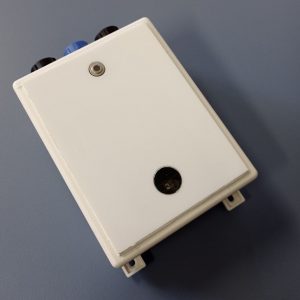
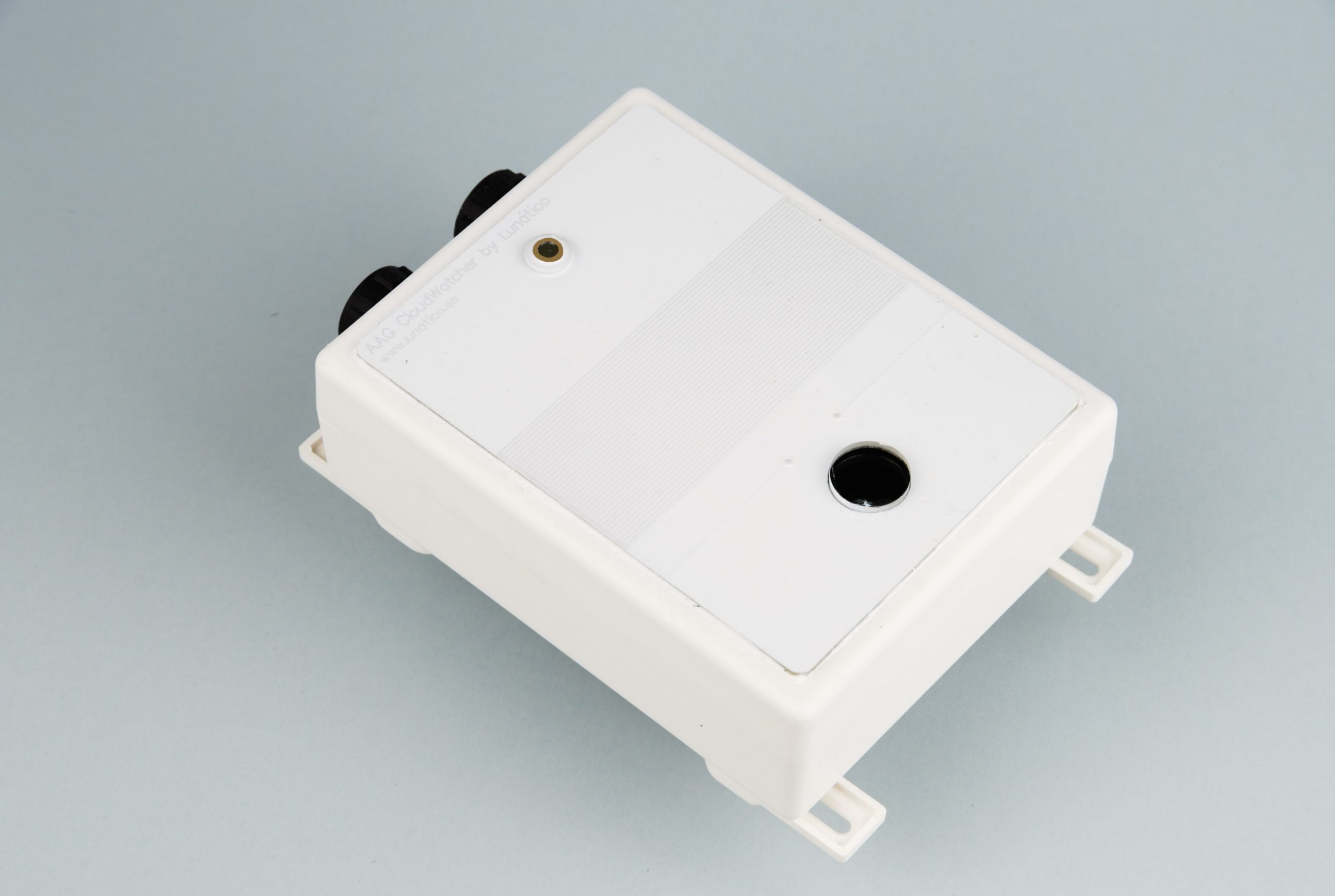
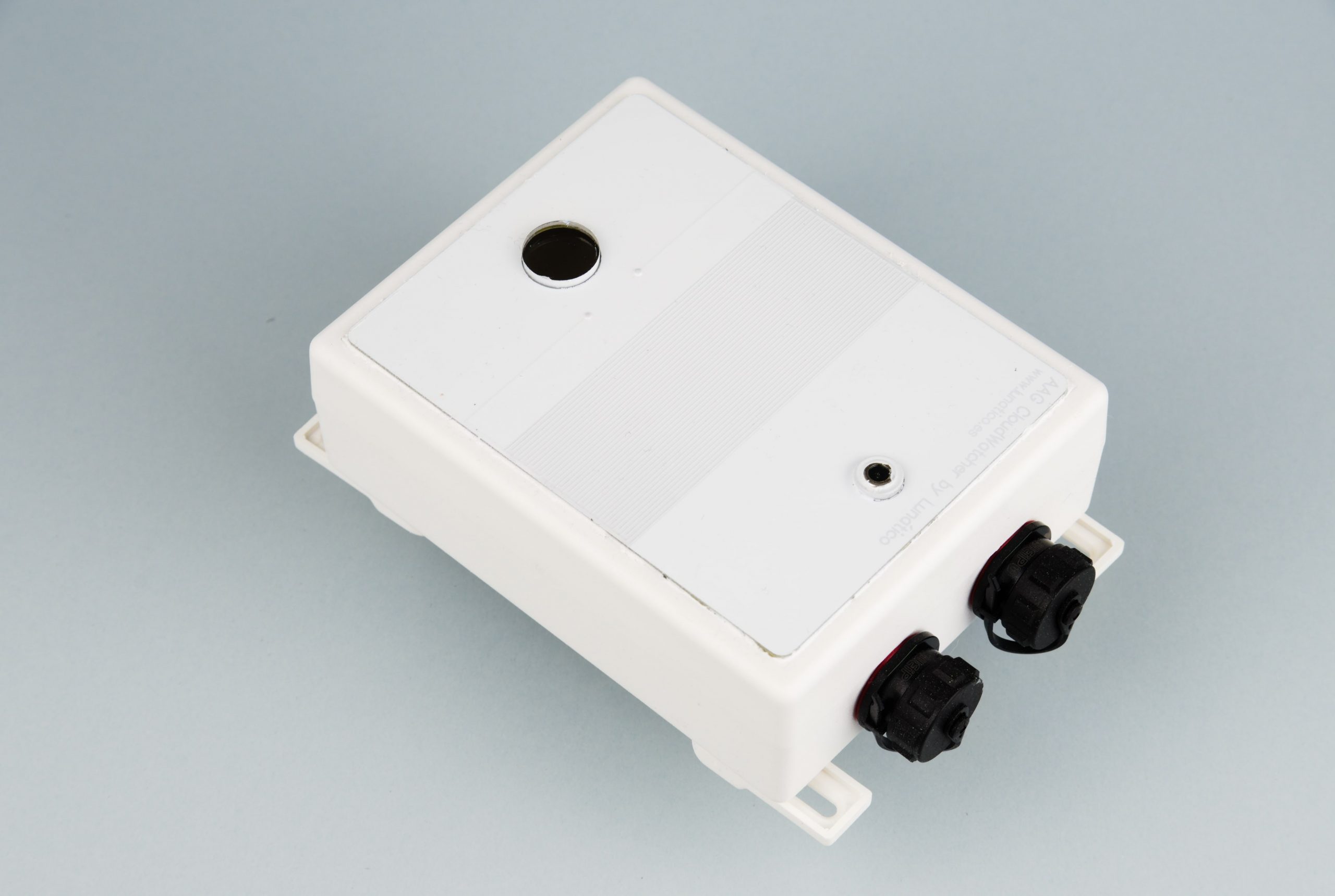
CloudWatcher, watching the sky since 2008.
 |
Why observatory owners choose CloudWatcher
|
|
Common configurations |
|
(*) Find here the price list of the REPAIRS AND SPARE PARTS for the AAG CloudWatcher.
Choosing the right configuration
Rain sensor
This model uses the standard capacitive rain sensor. A separate CloudWatcher Hydreon model is available for users who prefer the Hydreon RG-9 optical rain sensor.
Not sure which rain sensor to choose? Read our comparison guide.
Humidity & pressure sensor
Recommended for users who want additional environmental information, including relative humidity and atmospheric pressure.
Cable length
Available with several standard cable lengths. Custom cable lengths can also be supplied on request. For best results, choose the shortest practical length for your installation.
What does CloudWatcher monitor?
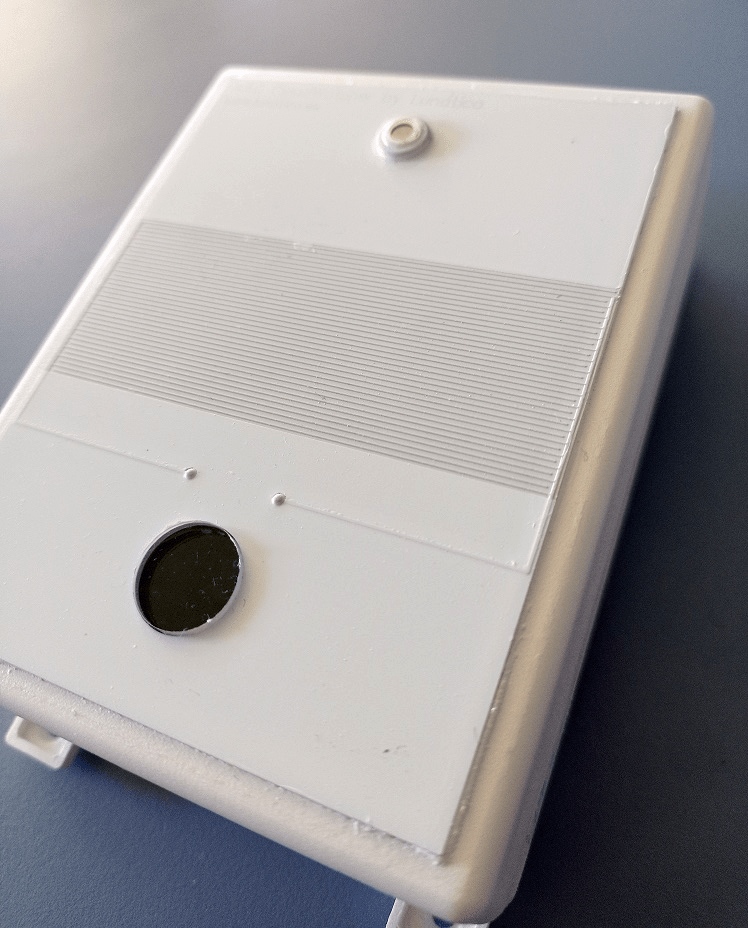
- Cloud presence
- Rain
- Sky brightness
- Ambient temperature
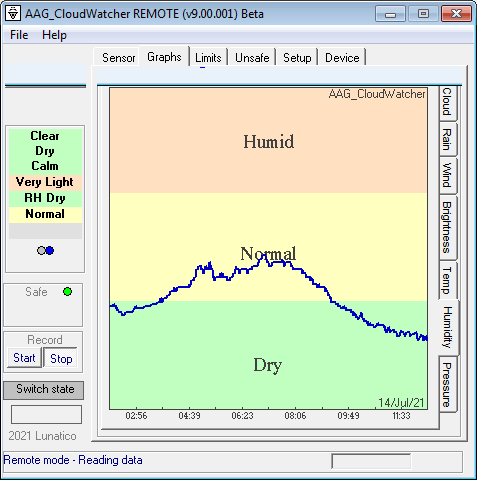
- Relative humidity (optional)
- Atmospheric pressure (optional)
- Wind speed (optional)
All measurements are available through a single interface and can be used by observatory automation software.
What’s included?
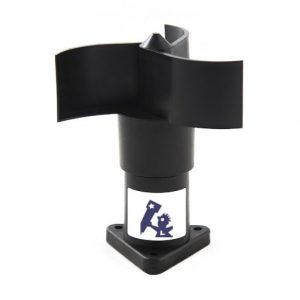
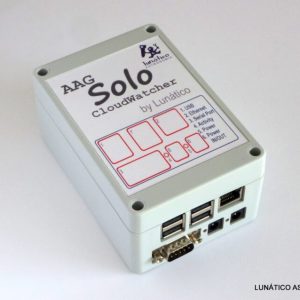
- CloudWatcher unit
- Cloud sensor
- Rain sensor (capacitive version)
- Sky brightness sensor with UV/IR filtering
- Temperature sensor
- Relative humidity and atmospheric pressure sensors (RH & AP versions only)
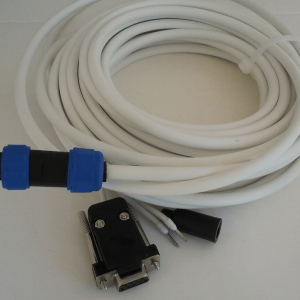
- Weatherproof cable with IP68 connector (cable versions only)
Optional:
Sensors and measurements
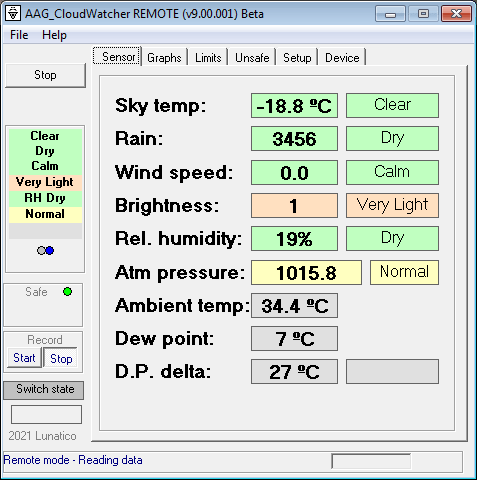
CloudWatcher displays all measurements through a single interface, making weather conditions easy to monitor and interpret.
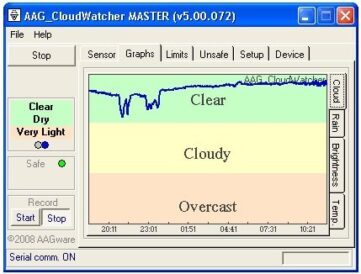
Clouds sensorUses an infrared sensor to monitor cloud presence and sky conditions. The sensor also measures the internal temperature of the unit. Cloud detection sensitivity can be adjusted to suit local conditions. |
|
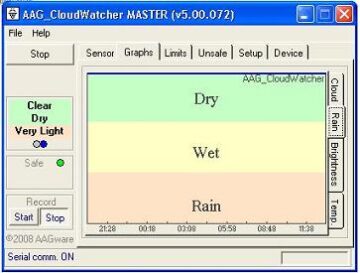
Rain sensorCloudWatcher supports both the standard capacitive rain sensor and the optional Hydreon RG-9 optical rain sensor. The software displays rain status and sensor readings in real time Not sure which rain sensor to choose? Read our comparison guide. |
|
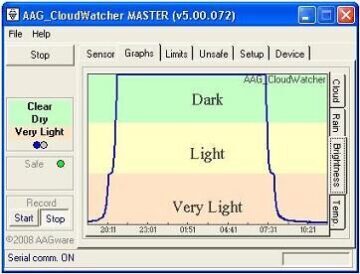
Sky brightness sensorMeasures sky brightness using a dedicated light sensor with UV/IR filtering. Useful for monitoring sky conditions and long-term site evaluation. Readings are displayed in magnitudes per square arcsecond (MPAS). |
|
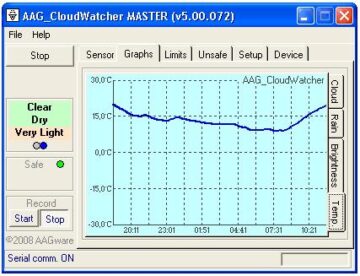
Temperature sensorMeasures ambient temperature and displays it in real time through the CloudWatcher software. |
|
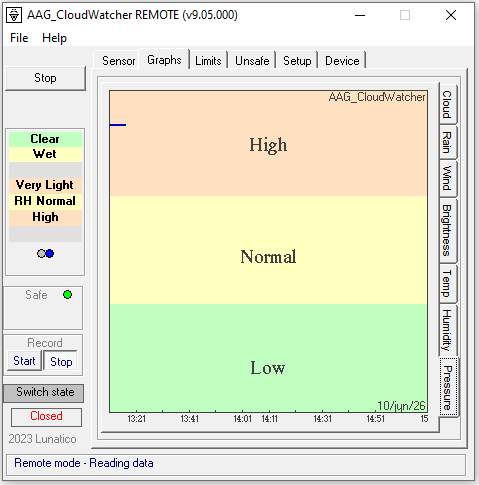
Relative Humidity & Atmospheric pressure sensor (RH & AP version)Optional sensor package providing relative humidity, atmospheric pressure and temperature measurements for more complete weather monitoring. |
|
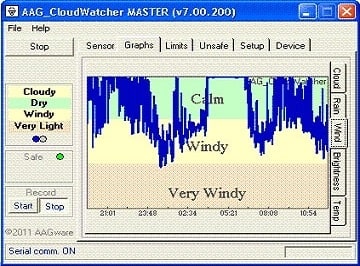
Anemometer (OPTIONAL)Optional wind sensor for monitoring wind speed and generating wind alarms when used with compatible software. |
|
Cable and connectivity
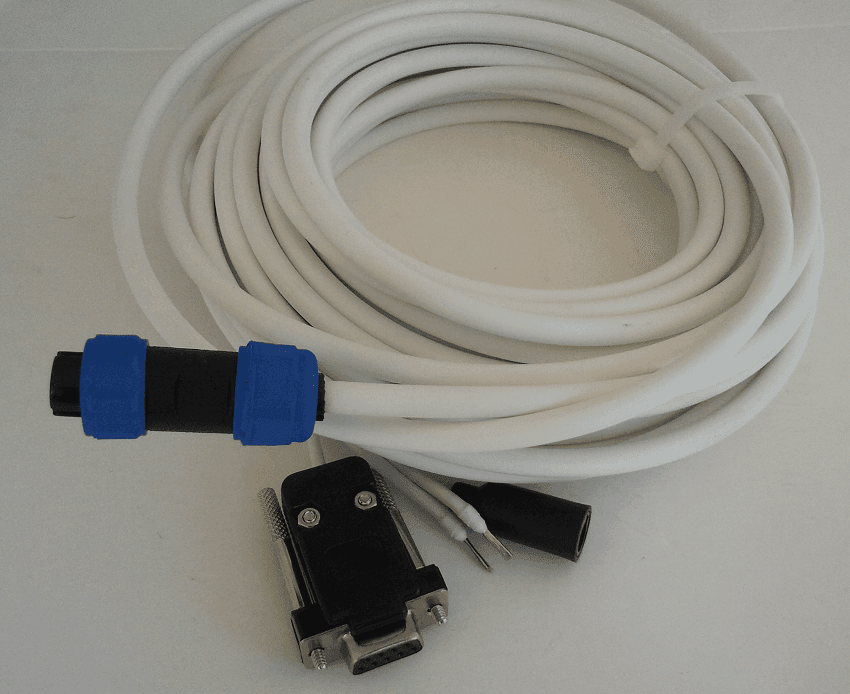
CloudWatcher is available with several standard cable lengths and can also be supplied without cable. Custom cable lengths are available on request.
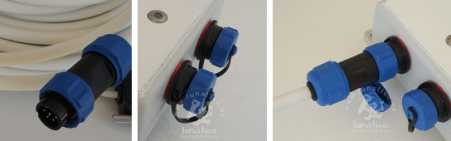
The weatherproof IP68 connectors allow easy installation and reliable outdoor operation.
Observatory control relay
Cable versions include a relay output that can be used by compatible observatory automation systems for roof or equipment control.
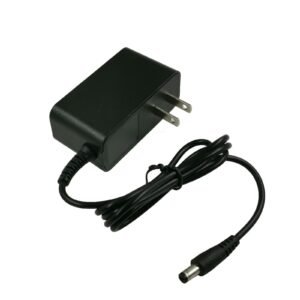
Technical specificationsPower supply: 12–15 VDC Connector: 5.5 / 2.1 mm DC jack (centre positive) Communication: RS232 serial port Weight: • 160 g (standard version) Dimensions: • 130 × 85 × 45 mm (standard version) |
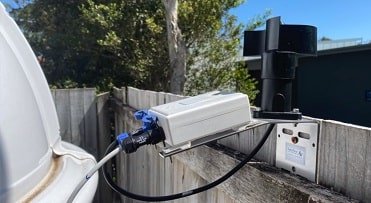
If you want to take a look at our CW and SOLO installed in Hamilton, New Zealand, click here: http://aagsolo.lunatico.es:10800/ |
Software compatibility and remote operation
CloudWatcher provides standard ASCOM drivers, allowing it to be used with virtually any astronomy or observatory automation software that supports ASCOM.
Compatible with software such as:
|
|
|
|
|
|
|
|
|
CloudWatcher measurements can be displayed, logged and used by compatible software to monitor weather conditions and support observatory automation.
Designed for unattended and remote observatories, CloudWatcher can be monitored locally or remotely and integrated with observatory management software and roof automation systems to help protect equipment when weather conditions deteriorate.
Legacy software notice: WeatherCentre is no longer supported or maintained. Existing installations may continue to operate, but new installations should use currently supported software solutions.
Monitoring and alerts
CloudWatcher can generate alarms and notifications when weather conditions become unsafe.
Features include:
- Real-time weather monitoring
- User-configurable alarm thresholds
- CloudWatcher can generate alarms and notifications when weather conditions become unsafe.
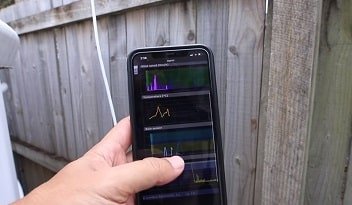
- Remote monitoring from computers and mobile devices
- Relay output for observatory protection systems
CloudWatcher documentation:
- User Manual
- Some notes about cloud detection and the CloudWatcher
- Readme first
- More information
- Software downloads
- CW data display
- Comparison between the Capacitive sensor and the Hydreon sensor
- New light sensor for the CloudWatcher